
FCI Yazoo Low II Outcomes
FCI Yazoo City Low II belongs to the Federal Bureau of Prisons. It is part of FCC Yazoo City alongside Low and Medium. A person may leave Low II for one of those components, another BOP institution, a later federal placement, a receiving authority, or the community. Only the last group of outcomes can end BOP custody, and even then another legal status may continue.
Current component names matter here. Historical BOP material associated this part of the complex with a USP or high-security label. Old judgments and articles can therefore name a facility that current search results call Low II. Preserve the old wording as an alias, then follow the register number. A label change or inter-institution move is not a discharge.
Confirm FCI Yazoo Low II Release
The official BOP locator is the primary public route. Search with the register number when it is known. Other accepted identifiers include DCDC, FBI, and INS numbers. A name search can use age, race, and sex to narrow possible matches. Compare the result with the known case before recording any date.
- Search the BOP Inmate Locator with the federal register number.
- Match the name and descriptive fields to the correct person.
- Capture the exact institution label, custody wording, and displayed release date.
- Check whether Low II replaced an older USP label in the source being compared.
- Review the federal judgment and later docket entries for supervised release or another order.
A result that lists a new BOP facility proves a transfer, not release. An explicit “Released” or “Not in BOP Custody” result establishes the end of BOP custody only. If no result appears, recheck the identifier and spelling rather than assuming the person is free. The Yazoo County custody search routes explain when another system should be followed.
Note: The BOP register number remains the best link between an older USP record and the current Low II name.
FCI Yazoo Low II Contacts
The BOP complex listing is the verified current source for the Low II name. The inmate locator carries public custody results. A federal court docket carries the judgment and supervised-release history. The research did not verify a Low II street address, direct release phone, or public release hours, so no such details are supplied.
FCI Yazoo City Low II
Federal Bureau of Prisons
FCC Yazoo City, Mississippi
Official FCC Yazoo City listing
BOP Inmate Locator
Federal sentence and release questions do not belong with the Yazoo County Sheriff or MDOC. When requesting a federal record, supply the register number, current and historical institution names, approximate dates, and the exact document sought. If the BOP record shows another receiving authority, continue with that office from the transfer date.
FCI Yazoo Low II Names
BOP’s current FCC search returns Low, Medium, and Low II. Historical BOP material used USP Yazoo City for the high-security component. The distinction is more than a naming detail because web results, family papers, and court files may appear to describe different places when they refer to the same evolving complex.
Use the current BOP complex results as the naming baseline.
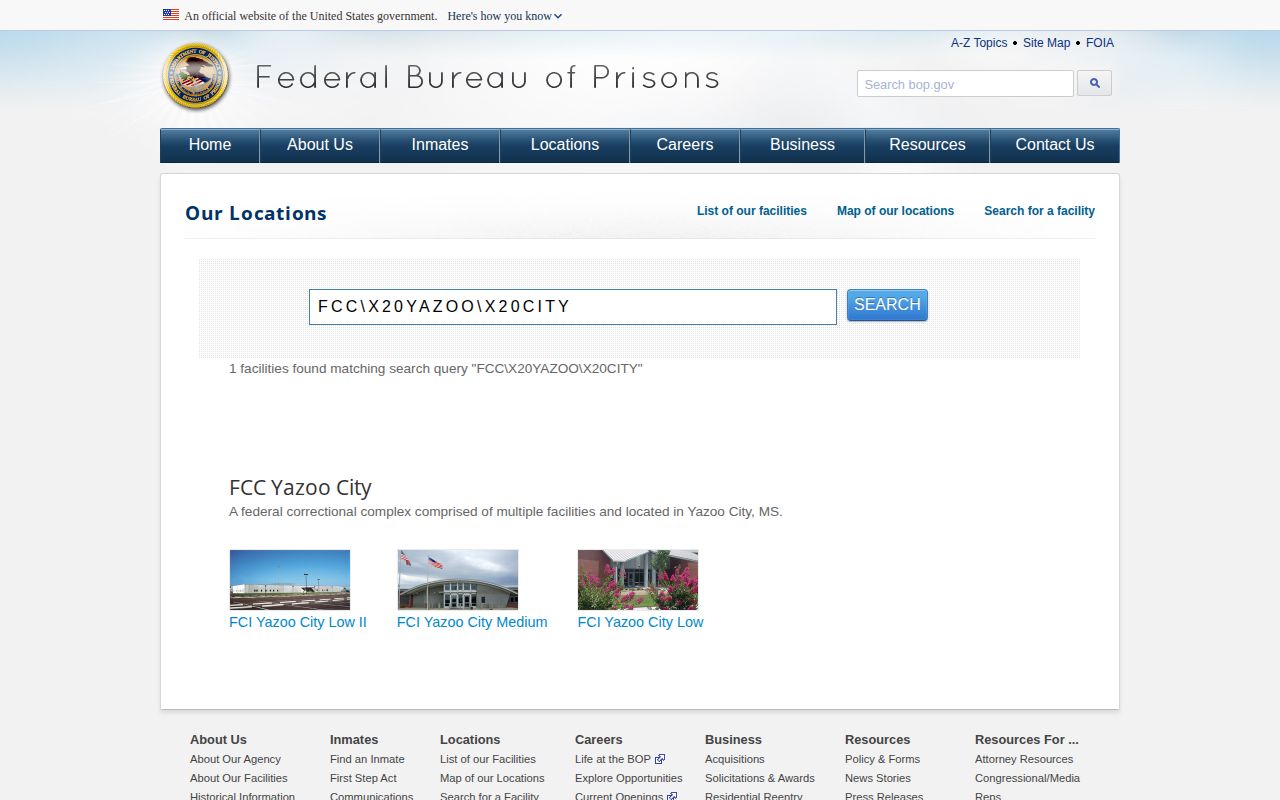
The source view confirms that present inquiries should use Low II, while historical USP wording may still be kept as an alias for matching older documents.
| Source wording | How to handle it |
|---|---|
| FCI Yazoo City Low II | Use as the current BOP component name |
| USP Yazoo City | Treat as historical context and confirm by register number |
| FCC Yazoo City | Complex name; identify the component |
| Different BOP institution | Transfer evidence, not release by itself |
FCI Yazoo Low II History
Yazoo’s federal complex is a major source of local search confusion. Older BOP material described a camp, two FCIs, and a USP across an approximately 1,000-acre complex. Current public results use Low, Medium, and Low II. This is the strongest facility-history angle for Low II because the alias can directly change where a reader searches.
Historical names should not be erased, but they should not drive a present contact request. Record both names and the date of each source. Then search the register number in the current locator. The same method helps separate BOP custody from the county-operated Yazoo Regional Correctional Facility, which can house MDOC men but is not part of FCC Yazoo City.
The former Yazoo County Community Work Center adds another old name to local results, but it closed in 2016 and was an MDOC site. It is not an alternate name for Low II. Agency, number system, and date must all align before two records are joined.
FCI Yazoo Low II ICE Handoffs
No ICE detention facility was verified in Yazoo County. Immigration custody can still follow BOP custody if the federal movement record identifies an ICE handoff. That outcome must come from evidence. A person’s identity or the end of a BOP record is not enough to infer it.
With a documented handoff, search the ICE Online Detainee Locator by the exact nine-digit A-number and country of birth, or by exact biographical details. ICE states that the system focuses on current custody and can include some people released within the last 60 days. Delays and exclusions mean a miss is inconclusive.
The ICE Jackson check-in office in Pearl serves Yazoo County but does not hold detainees. Do not list it as Low II’s release destination without a movement record. When ODLS is blank, use the proper immigration case or direct agency channel and preserve the BOP end date as a separate event.
Note: End of BOP custody and start of ICE custody can occur on the same timeline while remaining separate agency records.
Read FCI Yazoo Low II Results
A released BOP result should be quoted in meaning, not broadened. “Not in BOP Custody” means the Bureau’s confinement ended. It can coexist with supervised release, another agency’s custody, or a later case. Review the official locator result format.
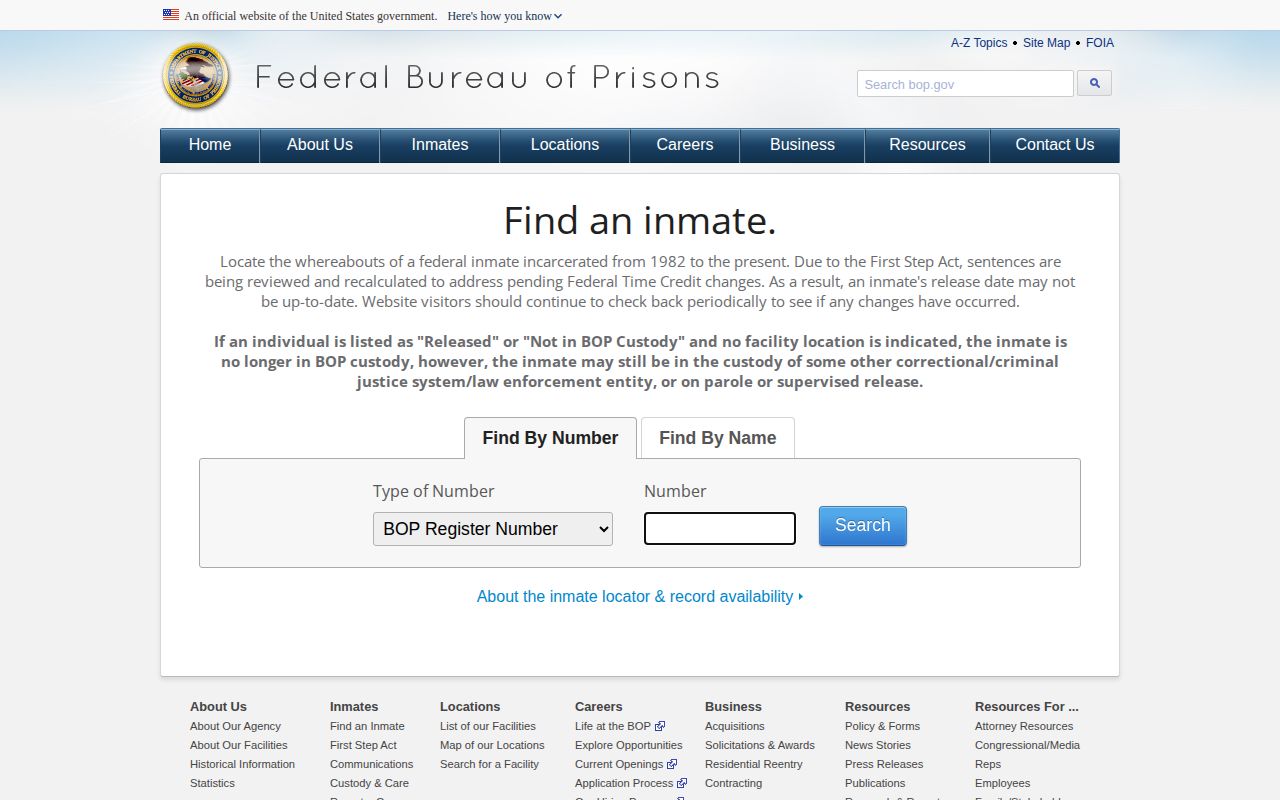
The displayed register number, date, and federal phrase provide a sound source for the BOP episode. They do not answer every post-prison question.
- Released
- An explicit BOP result showing that the Bureau custody episode ended.
- Supervised release
- A court-ordered community term that can follow federal prison.
- Transfer
- A move between custodians or institutions while confinement continues.
- Discharge
- The end of a legal term, which should not be assumed from a facility move.
When dates conflict, check that each source covers the same person and same event. A court sentence date, a projected locator date, a transfer date, and the actual end of BOP custody can all differ without being wrong. Ask the owner of the disputed field to explain or correct its own record.
The federal docket supplies facts the locator does not. It shows the sentence imposed and any term of supervised release that follows prison. Later entries may show a change or revocation. The docket is not a physical movement log, so pair its orders with BOP’s status rather than treating the judgment date as the day a prisoner left Low II.
USMS records can matter before BOP custody or during a court-directed movement. The Marshals Service may hold federal pretrial prisoners in several types of facilities and later release them under court order or deliver them to BOP. Because there is no verified public historical USMS release-name archive, use the federal order and ask the actual custodian or USMS for the movement.
For a written federal request, identify both Low II and any historical USP wording. Add the full name, register number, date range, and exact record requested. Seek the public release or transfer entry and any releasable receiving-agency field. A precise request is more likely to distinguish a name change from a true movement.
When an old source and current source appear to disagree, compare their publication dates first. Then match the register number and the event. Current BOP naming controls the present facility route, while the historical name helps locate older material. Neither label alone proves whether the person remained in BOP custody.
A blank locator search cannot carry the same weight as an explicit released result. Recheck spelling, aliases, and federal identifiers. If the person is matched and the result shows a future date, treat it as projected. If it shows a past release with explicit wording, report the BOP endpoint and then check for supervision or another custodian.