
FCI Yazoo Low Release Paths
FCI Yazoo City Low is one component of Federal Correctional Complex Yazoo City. BOP also associates an adjacent minimum-security camp with the Low institution. The federal record route follows the person’s register number, not the fact that the prison is physically in Yazoo County. The Yazoo County Sheriff and MDOC do not compute federal sentences or maintain the BOP release result.
A person can leave Low for another BOP institution, the camp, a residential reentry placement, another authority, or the community. A transfer is not release. BOP’s locator can display a release date and wording such as “Released” or “Not in BOP Custody.” That wording closes the BOP custody episode, but BOP warns that another justice or law-enforcement system can still hold the person. Federal supervised release may also begin after prison.
Confirm FCI Yazoo Low Release
The BOP Inmate Locator covers federal inmates from 1982 forward. A register number gives the strongest starting point. The search can also use DCDC, FBI, or INS numbers, or a name narrowed by age, race, and sex. Identity must be matched carefully because a name-only result can point to the wrong person.
- Open the official BOP Inmate Locator and search by register number whenever possible.
- Compare the full name, register number, age, race, and sex shown in the result.
- Record the exact custody wording, displayed location, and release date without changing its meaning.
- Distinguish a future projected date from a past result that states BOP custody ended.
- Read the federal case docket and judgment for supervised release, later revocation, or another court order.
If the locator has no result, try the known identifiers and spelling variants again. A no-result is weaker than an explicit released record. The Yazoo County released inmate search distinguishes this BOP path from local, MDOC, and municipal records.
Note: Save the exact BOP wording and date because “Not in BOP Custody” is narrower than unconditional freedom.
FCI Yazoo Low Contacts
Use the institution’s current official page for facility contact and visiting information. Use the locator for public custody status. Use the federal court file for the sentence and supervised-release terms. Research did not supply a verified street address, direct phone, or release-desk hours for this component, so none is inferred here.
FCI Yazoo City Low
Federal Bureau of Prisons
FCC Yazoo City, Mississippi
Official institution page
BOP Inmate Locator
Questions about a federal sentence should not be sent to the Yazoo County Sheriff merely because the institution sits in the county. The sentencing court record supplies the judgment. BOP supplies federal custody and movement data. If another receiving authority is named, follow that agency’s record from the point of handoff.
FCI Yazoo Low Records
The official FCC search identifies Low, Medium, and Low II as current components. Older descriptions of the complex mention a prison camp, two federal correctional institutions, and a penitentiary. Those names help interpret past records, but current requests should use the present BOP name and the prisoner’s register number.
View the official FCC Yazoo City results to confirm the component names.
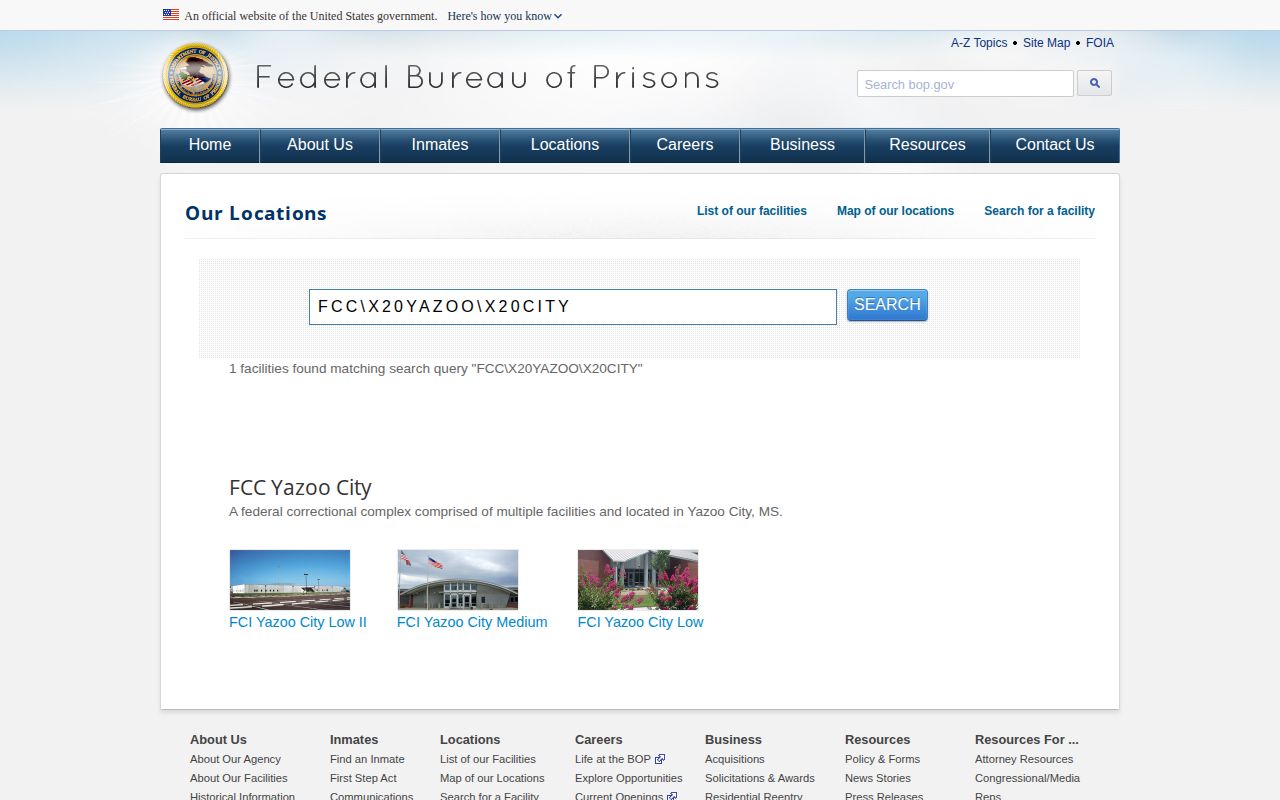
The source view places Low within the larger federal complex, which is why a move to another Yazoo component cannot be read as community release.
| Federal record | What it establishes | What it does not establish |
|---|---|---|
| BOP locator | BOP location or end of BOP custody | End of all supervision or other custody |
| Federal judgment | Sentence and supervised-release term | Exact physical exit time |
| Facility movement | Transfer from Low | Community discharge without destination |
FCI Yazoo Low Context
Yazoo has several unrelated custody systems within one county name. The sheriff-operated regional facility includes MDOC prisoners. Yazoo City Police has municipal holding cells. FCC Yazoo City contains three current BOP institutions. A broad web search can blend all of them, even though none can answer for another sovereign’s release record.
Low also has a camp association that deserves care. A person’s move between the main low-security institution and the camp remains within the federal system. Likewise, a BOP transfer out of Yazoo County can make a local institution result change while BOP custody continues. Search the person, not just the facility name.
Note: Use the register number to follow a federal prisoner across BOP locations, including moves within or beyond FCC Yazoo City.
FCI Yazoo Low ICE Handoffs
No ICE detention center was verified in Yazoo County. Still, a former federal prisoner may enter immigration custody when BOP custody ends. The BOP result alone does not prove that this happened. Look for an actual destination or immigration record, and never infer a handoff from name, birthplace, or perceived status.
When evidence identifies ICE, search the ICE Online Detainee Locator. It accepts a nine-digit A-number with country of birth or exact biographical information. ICE describes it as a current locator that can include some people released within 60 days. Not everyone appears, and updates can lag.
A missing ODLS record proves little. Contact the relevant immigration case channel when the locator is inconclusive. The ICE Jackson check-in office serves Yazoo County, but it is not a detention facility and should not be treated as the destination without a source record.
Read FCI Yazoo Low Results
BOP’s explicit released wording is strong evidence that the federal prison episode ended. Review an example through the official BOP locator source.
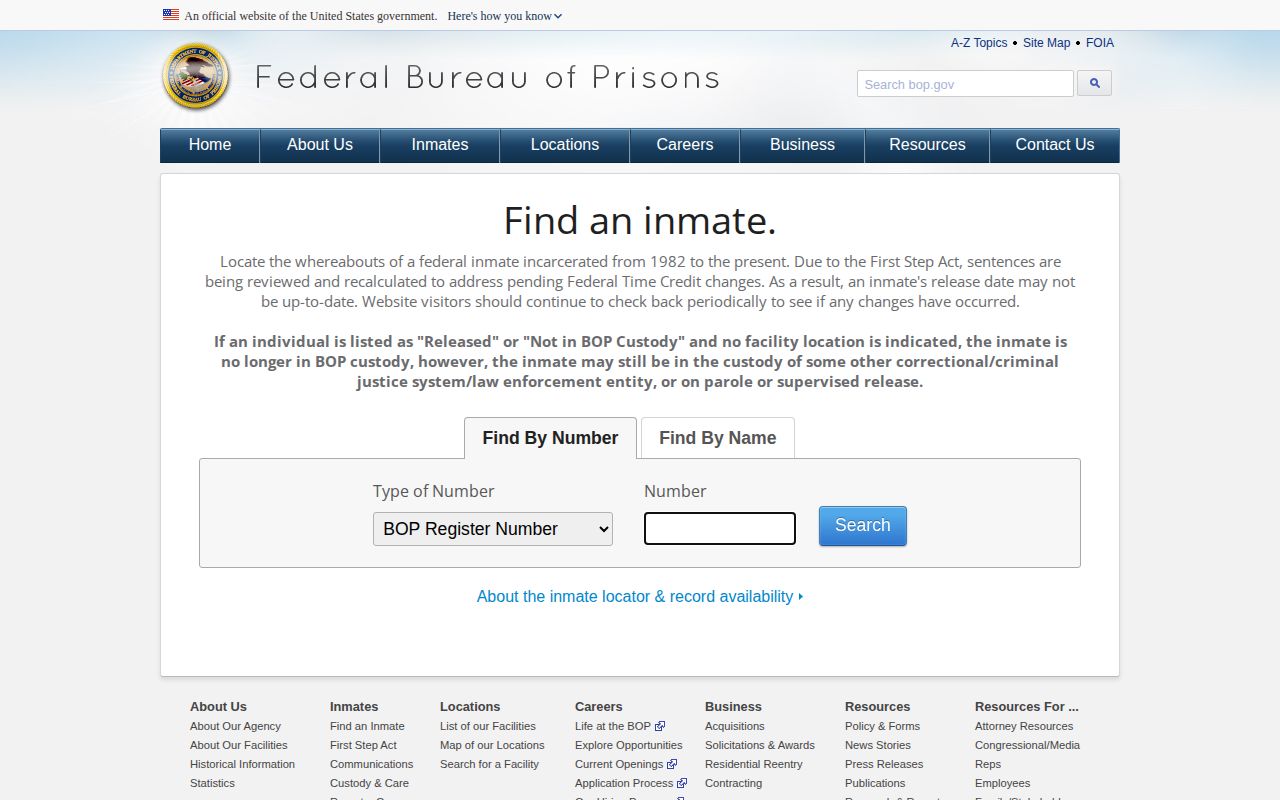
The result format shows why the displayed date and BOP register number should be preserved, while the wording must not be expanded into a claim about every other authority.
Supervised release is a federal court-ordered period served in the community after prison. It is not the same as BOP confinement, and it is not unconditional discharge. A later revocation can return a person to custody. Check the judgment and later docket entries when the question goes beyond the end of BOP custody.
The federal docket also helps separate the sentence from the movement record. A judgment can impose prison followed by supervised release, while BOP reports where its confinement stands. An order may change the sentence or address a later violation. Preserve the case number, judgment date, register number, BOP status date, and any receiving authority rather than forcing all federal dates into one release field.
USMS custody follows a separate stage. The Marshals Service may hold a federal pretrial prisoner in a federal, state, local, or private facility and later release that person under court order or deliver a convicted person to BOP. It has no comparable general public historical release locator. When the episode predates BOP or involves marshal transport, use the federal order and ask the actual holding facility or USMS for the movement record.
That distinction is important at FCC Yazoo City. Leaving Low under transport may only mean the prisoner entered another federal placement. A residential reentry center or home-confinement status also should not be described from guesswork based on the institution disappearing. The source record must name the placement or state that BOP custody ended.
A record request should be precise. Include the full name, register number, institution, approximate movement or release date, and the specific record sought. Ask for a public release or movement record and any releasable destination field. Do not expect the county Sheriff to hold the federal file, and do not ask MDOC to explain BOP’s time calculation.
When two sources conflict, first test identity. Next compare the event date with the database update date. Then decide whether each source covers Low, the broader BOP system, the sentencing court, or a receiving agency. A projected date and a later actual status can differ because the first was an estimate. Ask BOP to address a disputed BOP field and the court clerk to address its docket.
BOP records date back to 1982 in the locator, but a no-match still requires care. Recheck hyphenation, aliases, and each available identifier. Search results are evidence only when the person is matched. An explicit released record with a date is stronger than a blank search, and the federal docket remains essential when the question includes supervision after prison.
Preserve a clean evidence trail. Save the official URL, access date, register number, exact status phrase, and the displayed date without copying more personal data than the inquiry needs. If a later BOP result changes, compare the update with the earlier capture and any court order. For a suspected error, send the source record to the agency that owns the field and ask for its correction process in writing.